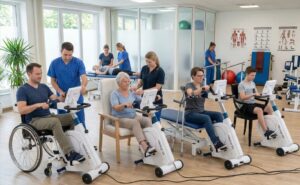
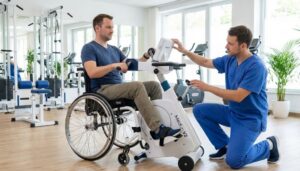
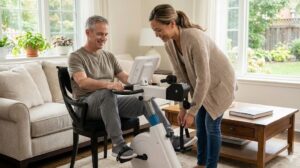
Rehabilitation clinics, long-term care homes, outpatient therapy centres, and hospital physio departments are increasingly recognizing the value of motor-assisted ergometers—often called active-passive cycle trainers—as core equipment for clients with limited mobility, neurologic conditions, post-operative needs, or deconditioning. But as with any major purchase, choosing the right device requires careful evaluation of clinical goals, client population, budget, staff training, and long-term clinic workflow.
Before you invest in a motor-assisted ergometer, here are the key questions and criteria your team should consider to ensure the purchase aligns with your mission, client needs, and operational realities.
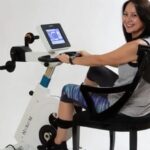
Did you know? The MedUp Active-Passive Cycle Trainer is designed for clinics that work with neurology, long-term care, post-operative rehab, and community wellness programs—offering upper and lower limb support, active-passive modes, and adjustable parameters to serve a wide range of ability levels.
1. Define Your Client Population and Clinical Goals
First, identify who you serve and what outcome you most want to influence. Are your clients:
- Neurology patients recovering from stroke, MS, Parkinson’s, or SCI?
- Long-term care residents needing circulation, mobility, and spasticity management?
- Post-operative orthopedic patients (knee, hip, shoulder) needing early movement and conditioning?
- Older adults in wellness programs, small-group exercise, or functional fitness?
Each client type places different demands on equipment. For example, neurology clients may need full passive mode, safety supports, and upper-limb involvement; LTC residents may require simple controls, seated work, and adjustable speed for weak legs; wellness group clients might value ease-of-use and engagement features. Clearly defining your client mix helps you select features like upper/lower limb support, motor assistance, programmable sessions, and interface usability.
2. Active-Passive Modes vs Traditional Mode
Many clinics already have standard stationary bikes—but motor-assisted ergometers offer a distinct advantage: the ability to assist movement when voluntary effort is limited. This matters especially for:
- Clients with minimal strength
- Clients with variable effort from day to day
- Programs where safety and repetition matter more than voluntary exertion
Motor-assisted modes allow clients to participate even when they cannot sustain consistent effort. This delivers benefits in joint mobility, repetition, circulation, and motor-control development that traditional bikes cannot.
3. Upper and Lower Limb Capability
A major factor in rehab versatility is whether equipment supports both upper and lower limb cycling. Clients in neurology or LTC segments often have compromised legs or arms. Having a dual-limb system allows clinics to:
- Train arms and legs independently or simultaneously
- Support seated clients using upper limbs only or assisted legs
- Program bilateral coordination
- Provide variety and maximize usage across client populations
Check for compatibility, adjustability, and ergonomic comfort.
4. Safety, Accessibility and User-Friendly Design
Clinic equipment must be safe and accessible for clients with mobility limitations. Key features include:
- Low step-over or seated entry
- Secure seating or harness options
- Clear controls and visual feedback
- Emergency stop or override
- Easy transition between passive, assisted and active modes
- Resistant to misuse or unsupervised operation
Prioritize equipment where therapists can adjust settings quickly, monitor client engagement, and safely integrate into therapy sessions.
5. Clinical Benefits That Match Your Outcomes
When choosing devices, ask: “What specific clinical outcomes does this training tool deliver?” Look for documented benefits such as:
- Improved circulation and blood flow, helping prevent complications like edema and deep-vein thrombosis
- Increased joint mobility, reducing stiffness and contracture risk
- Stimulation of neural pathways through repeated movement
- Reduced spasticity via controlled, consistent range of motion
- Improved motor control as clients regain voluntary movement
- Functional cardiovascular conditioning even with limited mobility
Review peer-reviewed literature and case studies to ensure the equipment supports these outcomes. For example, assisted cycling has been shown to increase cerebral blood-flow velocity and repetitive motor activation in neuro-rehab programs.
6. Program Integration and Clinician Training
Purchasing is only the first step—successful implementation depends on clinician training, program integration, and session planning. Consider:
- Does the manufacturer offer training or certification for therapists?
- Can the device integrate into existing client-management software or session tracking?
- Are there preset protocols or templates for neurology, ortho, or wellness use?
- How easy is it to switch clients quickly between modes and adjust to varying levels of ability?
Staff buy-in and competency will ultimately determine whether the equipment becomes an asset or sits idle.
7. Footprint, Maintenance and Lifecycle Costs
Equipment must fit your physical space and budget. Investigate:
- Dimensions and required clearance around the machine
- Electrical requirements and setup (if needed)
- Maintenance schedules, warranty, and support access
- Software updates and parts availability
- Expected lifespan, resale value, and upgrade pathways
An upfront price is only one part of cost; ongoing support and utilization matter greatly.
8. ROI, Utilization and Program Marketing
While quality equipment supports outcomes, clinics also need to ensure measurable ROI through utilization, outcomes tracking, and program differentiation. Key questions include:
- How will usage be scheduled (individual therapy, group classes, LTC recreation, home programs)?
- Can outcomes (circulation, joint mobility, session repetitions) be tracked and reported?
- Does the equipment help differentiate your service offerings in your market (e.g., neurology rehab, LTC wellness, home-based programs)?
- Does it help attract new referral sources (physicians, hospital departments, long-term care referrals)?
A high-quality ergonomic trainer that is well integrated and marketed effectively can pay for itself through increased referrals, extended therapy sessions, or multiple revenue streams.
9. Vendor Support, Evidence and Clinical Resources
When investing in high-value rehab equipment, vendor support and clinical resources matter. Look for:
- Peer-reviewed case studies or trials
- User testimonials from similar clinics
- Protocol libraries for neurology, ortho, wellness use
- Technical support and training availability
- Referrals from existing users
Choosing a vendor who acts as a partner rather than a supplier helps your clinic evolve the usage and maximize outcomes. Be sure any questions you have are answered in advance.
10. Make Your Decision With Confidence
Selecting the right rehab equipment takes time, but when done correctly it becomes a cornerstone of your therapy program. By aligning your client population with device capabilities, training staff, integrating programming, tracking outcomes, and marketing usage, you can ensure the machine doesn’t sit unused but becomes a high-return asset.
If your clinic is considering a motor-assisted ergometer and you’d like to explore options or arrange a demo, visit the health-benefits page for more information. For detailed questions or quote requests, contact MedUp today!