Skip to content

An Exceptional Therapy Cycle for People with Mobility Issues

MEDUP V3 Active-Passive Cycle Trainer

Licensed by Health Canada. GST/HST exempt

This wheelchair-accessible motor-assisted bike offers a host of health benefits to users who have mobility issues in their arms or legs.  

Suitable for all healthcare facilities, long term care homes and home-based exercise programs.

Contact for price

Spasm Release

Quickly identifies and releases spasms for safe training

Symmetry Training

Indicates the degree of training of the left and right limbs.

Quiet

High-performance servomotors ensure quiet operation

MedUp Active-Passive Therapy Cycle

8" Touch Screen

Intuitive; responds to light touch; displays in full colour

5 Training Modes

Passive, Assisted, Active, Isokinetic, and Fine Motor Skills

Portable

Built-in wheels enable the device to be easily transported

Learn More About MedUp

See how MedUp helps move your arms and legs!

MedUp Cycle for Therapy and Recovery

Decreases Spasticity

Improves Joint Mobility

Relaxes Stiff Muscles

Helps Prevent Blood Clots

Improves Muscle Strength

Stimulates Blood Flow

Latest News

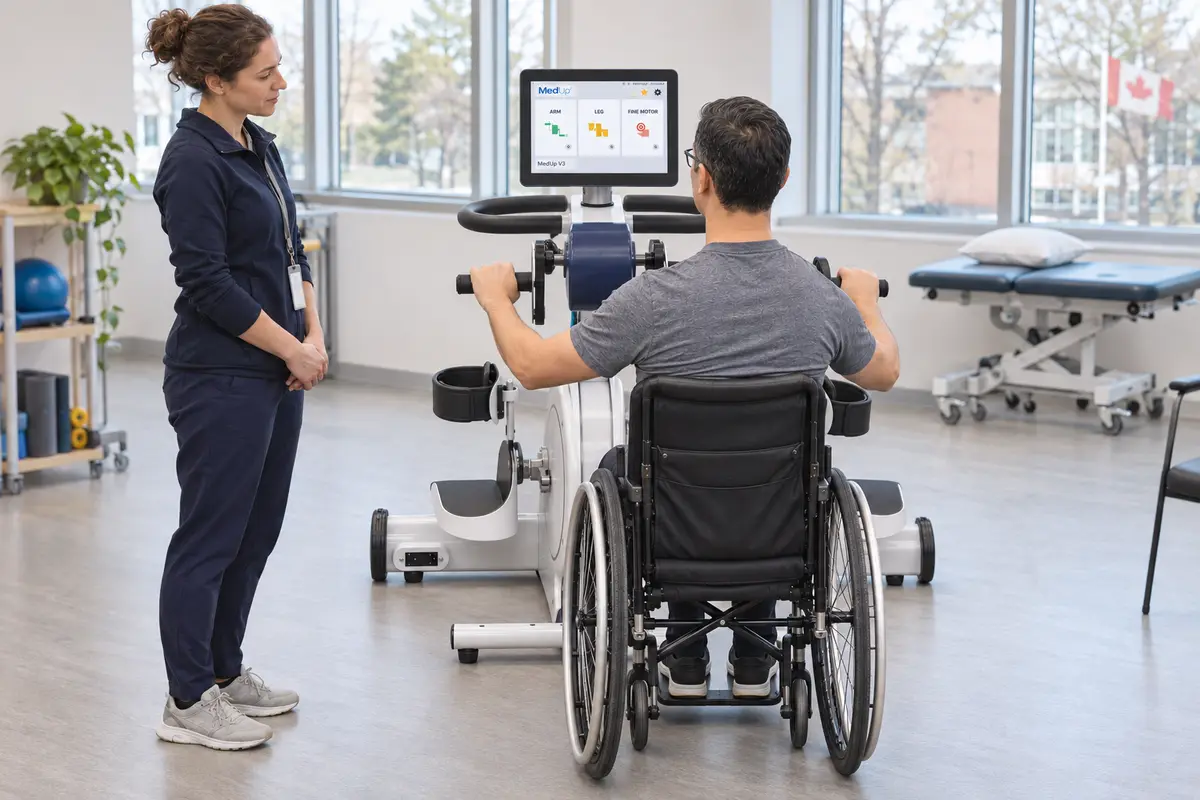
Wheelchair user completing upper-limb cycling on the MedUp V3

Upper- vs. Lower-Limb Cycling in Rehabilitation: When Is Each Used?

Upper- vs. Lower-Limb Cycling in Rehabilitation: When Is Each Used? Cycling-based rehabilitation is not limited to the legs. Depending on a person’s abilities and therapeutic objectives, cycling movements can involve
Read More
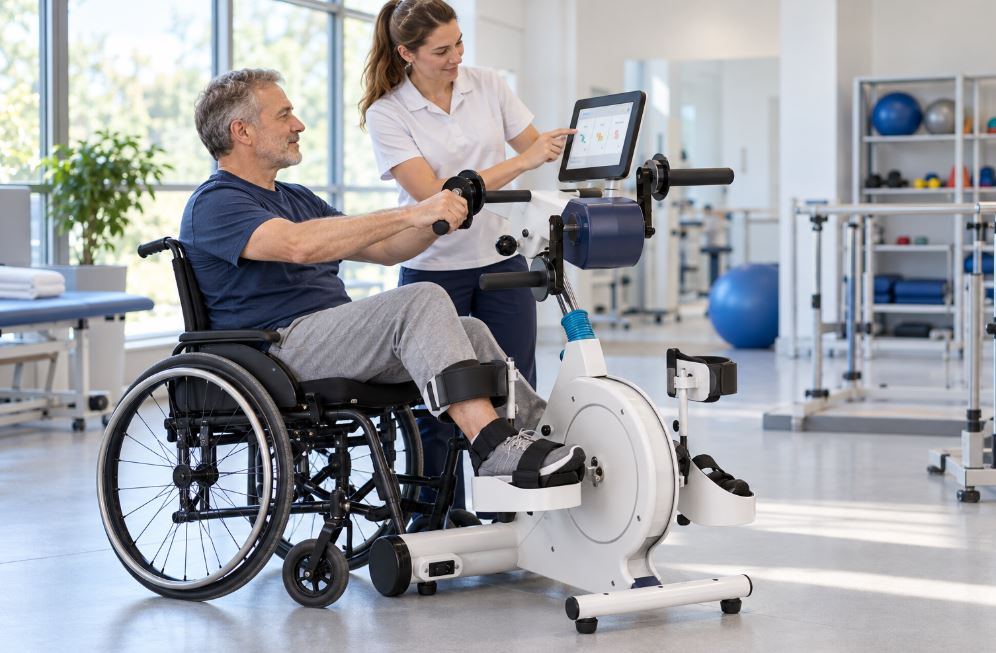
Wheelchair user completing lower-limb rehabilitation with a MedUp V3 cycle trainer

Active vs. Passive vs. Assisted Cycling in Rehabilitation: What’s the Difference?

Cycling can play several different roles in rehabilitation. One person may need a motor to move their arms or legs completely. Another may be able to initiate the movement but
Read More
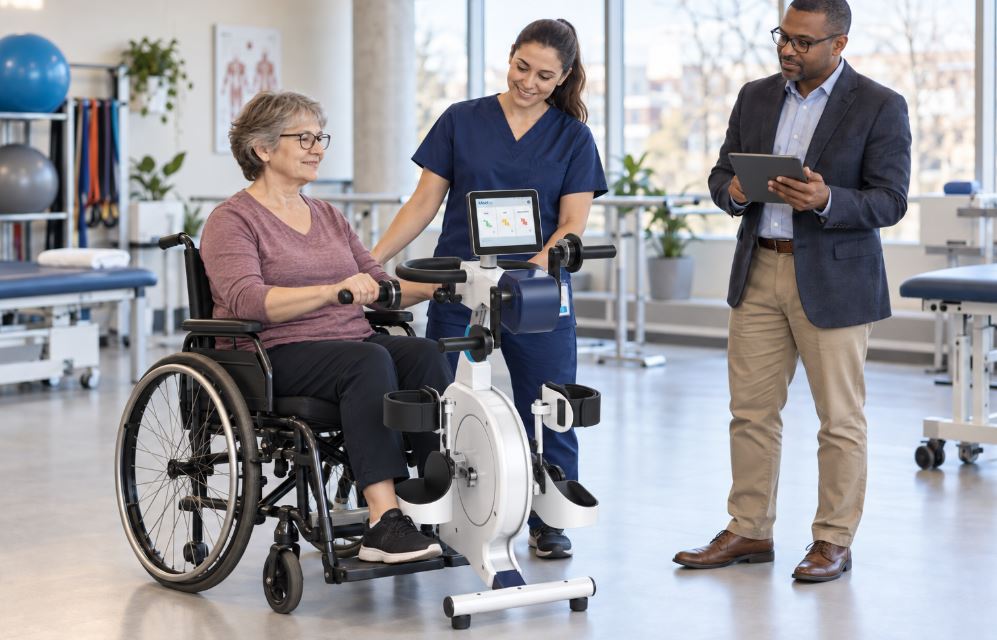
Healthcare team evaluating a MedUp V3 active-passive cycle trainer

Is an Active-Passive Cycle Trainer Worth It? Building the Business Case for Your Healthcare Facility

Purchasing rehabilitation equipment is rarely a clinical decision alone. Healthcare facilities must also consider budgets, staff capacity, patient demand, equipment utilization and whether a new device can support measurable program
Read More