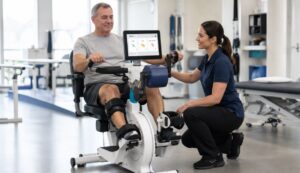
For physiotherapy clinics, rehabilitation centres and care teams working with clients who have limited mobility, neurological conditions or post-stroke challenges, the right equipment can make a meaningful difference in how therapy is delivered. But when it comes to specialized rehab technology, one of the first questions is often simple: how much does an active-passive cycle trainer cost in Canada?
The answer depends on more than the purchase price. Clinical-grade rehabilitation equipment can vary based on features, medical device status, training modes, wheelchair accessibility, upper and lower limb capability, delivery, service support and long-term use within a clinic or rehabilitation program.
For Canadian physiotherapists, clinic owners and rehab decision-makers, the better question may be: what affects the total value of an active-passive cycle trainer, and how do you know whether the investment makes sense for your setting?
This guide explains the main cost and value factors to consider before buying an active-passive cycle trainer for a physiotherapy clinic, neuro-rehab program, stroke recovery setting, eldercare rehab service, specialized gym or home-based therapy program.
Buyer note: The MedUp V3 Active-Passive Cycle Trainer is Health Canada approved and available for Canadian buyers looking for professional-grade motor-assisted cycling equipment. Pricing and shipping can vary based on needs and location, so clinics and care providers are encouraged to request details before planning a purchase.
Why active-passive cycle trainers are different from standard exercise bikes
A standard exercise bike is usually designed for people who can pedal independently, maintain position safely and tolerate a general fitness workout. An active-passive cycle trainer is different. It is designed for people who may not be able to generate consistent voluntary movement on their own.
That distinction matters for rehab settings. Patients recovering from stroke, living with neurological conditions, managing reduced mobility or rebuilding strength after a period of inactivity may require assisted, supported or fully motor-driven movement. In those cases, a consumer exercise bike may not be appropriate.
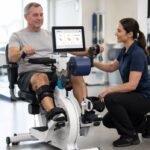
An active-passive cycle trainer may offer training modes that support different levels of ability, including passive movement, assisted movement and active user-driven movement. This allows the same device to support people at different stages of recovery or maintenance, depending on their tolerance, strength and rehabilitation goals.
The Heart & Stroke Foundation notes that aerobic activity after stroke should be designed by rehabilitation specialists or physiotherapists, with supervision based on the individual’s health condition. For clinics and rehab teams, this reinforces why equipment choice should be matched carefully to clinical use, safety and progression.
What affects the cost of an active-passive cycle trainer?
Because active-passive cycle trainers are specialized rehabilitation devices, pricing is influenced by several factors. These may include the device’s clinical features, safety systems, adjustability, accessories, regulatory status, shipping requirements and long-term service support.
When comparing options, Canadian clinics should avoid looking only at the lowest upfront price. A lower-cost device may be less valuable if it is difficult to use, unsuitable for wheelchair users, limited to one limb group, unsupported in Canada or not designed for repeated clinical use.
Important pricing and value factors may include:
- Whether the device supports passive, assisted and active movement
- Whether it can be used for both arms and legs
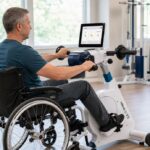
- Wheelchair accessibility
- Spasm detection or safety response features
- Adjustable speed and resistance settings
- Ease of setup for staff
- Progress tracking or user feedback
- Durability for repeated use in a clinic or rehab setting
- Shipping within Ontario or across Canada
- Warranty, service and support
- Medical device licensing or approval status in Canada
For a clinic, the best value often comes from equipment that can serve multiple patient groups, fit into daily treatment routines and remain useful as patients progress from assisted movement to more active participation.
Why clinical versatility matters for rehab clinics
One of the biggest value factors is versatility. A physiotherapy clinic or rehab centre may see a wide range of clients: stroke survivors, people with Parkinson’s disease or multiple sclerosis, older adults with reduced mobility, wheelchair users, post-surgical patients, people with deconditioning and clients who need low-impact movement support.
If a device can only serve one narrow group, it may be harder to justify the investment. But if it can support multiple types of users and programs, the equipment may become more useful over time.
For example, an active-passive cycle trainer may be considered for:
- Stroke recovery and neurological rehabilitation
- Upper limb and lower limb movement training
- Wheelchair-accessible exercise sessions
- Low-impact conditioning for people with limited mobility
- Spasticity or stiffness management programs
- Eldercare rehab and mobility maintenance
- Specialized exercise programs for people who cannot use standard gym equipment
This is where professional-grade equipment can offer more value than a basic movement device. The goal is not simply to buy a “rehab bike.” The goal is to choose equipment that can support a broader therapy workflow.
Cost should be considered alongside staff workflow
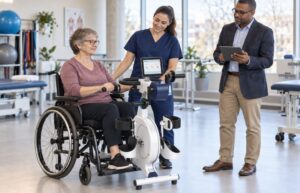
For clinics and rehabilitation providers, equipment has to work in real clinical conditions. A device may have strong features on paper, but if it is slow to set up, difficult to move, hard for staff to adjust or uncomfortable for patients, it may not be used consistently.
Staff workflow is an important part of value. Before investing, clinics should consider how the device would fit into daily appointments and treatment plans.
Useful questions include:
- Can staff position clients safely and efficiently?
- Can the device be moved between treatment areas if needed?
- Can wheelchair users access it without unnecessary transfers?
- Are settings easy to adjust between users?
- Can it support both supervised and semi-independent use when appropriate?
- Does it provide feedback that helps guide therapy sessions?
If equipment saves time, supports repeatable routines and helps staff serve a wider range of clients, it may provide stronger long-term value than the initial purchase price suggests.
Why wheelchair accessibility can influence value
Wheelchair accessibility is an important consideration for many rehab clinics and care settings. Some clients cannot safely transfer onto traditional exercise equipment. Others may have balance limitations, weakness, fatigue or mobility restrictions that make standard equipment unrealistic.
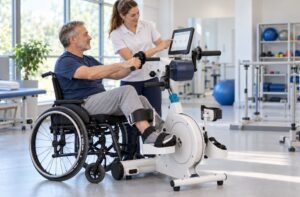
A wheelchair-accessible active-passive cycle trainer can help reduce barriers to participation. This may be especially relevant for clinics serving stroke survivors, people with spinal cord injuries, neurological conditions, advanced mobility limitations or seniors who need supported movement.
For buyers comparing equipment, wheelchair accessibility should not be treated as a small feature. It can affect who can use the device, how often it can be used and how easily staff can include it in therapy or wellness sessions.
For more context, MedUpBike has also published a guide on active-passive cycling for wheelchair users in Canadian care settings.
Health Canada approval and Canadian support
For Canadian clinics and care providers, medical device status can be an important consideration. Rehabilitation equipment may be used by people with complex needs, including limited mobility, neurological impairment, spasticity, weakness or post-stroke changes. Buyers need confidence that the equipment is appropriate for Canadian clinical or therapeutic use.
This is why Health Canada approval or licensing can be part of the value discussion. It does not replace a clinic’s own assessment of suitability, but it can help decision-makers compare professional rehab equipment against general fitness or consumer-grade alternatives.
Clinics may also want to consider whether support is available in Canada, whether parts or accessories can be obtained, and whether the supplier understands Canadian healthcare, rehabilitation and procurement needs.
For a deeper discussion of this issue, read MedUpBike’s article on Health Canada licensed rehab equipment for Canadian clinics and care facilities.
Shipping and delivery across Ontario and Canada
Shipping can be another part of the total cost. Professional rehabilitation equipment is larger and more specialized than ordinary fitness equipment, so delivery requirements may vary depending on the location, building access and setup needs.
Ontario-based clinics may have different delivery considerations than buyers in other provinces. Rehab centres, physiotherapy clinics, specialized gyms and care providers should ask about shipping, timing, setup, accessories and any practical details needed before the equipment arrives.
Questions to ask include:
- Is shipping included or quoted separately?
- Can the device be delivered to a clinic, facility or home?
- Are there requirements for room access or placement?
- What accessories are included?
- Is any staff orientation or setup guidance available?
- What happens if service or support is needed later?
These details can affect the true cost of ownership and should be clarified before purchasing.
How to think about return on investment for a rehab clinic
For a physiotherapy clinic or rehab centre, return on investment is not only about equipment cost. It is also about how often the device can be used, which clients it can serve, whether it supports treatment goals and whether it helps differentiate the clinic’s services.
A clinic might consider an active-passive cycle trainer if it regularly works with clients who have:
- Stroke-related mobility challenges
- Neurological conditions
- Spasticity or stiffness
- Limited strength or endurance
- Difficulty using standard exercise equipment
- Wheelchair access needs
- Long-term mobility maintenance goals
- Post-hospital or outpatient rehab needs
If the device can be integrated into many treatment plans, it may provide more value than equipment used only occasionally. It may also help a clinic better support clients who are not well served by standard gym-style rehab tools.
Questions to ask before requesting a quote
Before asking for pricing, clinics and care providers should think through how the device would be used in practice. This makes it easier to assess whether the equipment is a fit and whether the cost is justified.
Helpful questions include:
- Which client groups would use the device?
- Would it be used mainly for neurological rehab, eldercare rehab, mobility maintenance or general conditioning?
- Do clients need upper limb, lower limb or combined training options?
- Is wheelchair accessibility important?
- Will staff need to move the device between rooms?
- How many users might benefit from the equipment each week?
- Do we need passive, assisted and active training modes?
- Are safety features such as spasm recognition important for our clients?
- What support is available after purchase?
- What is included in the quoted price?
Asking these questions can help buyers compare the full value of the equipment instead of focusing only on the initial purchase price.
So, how much does an active-passive cycle trainer cost in Canada?
Because clinical-grade active-passive cycle trainers can vary by model, features, accessories, shipping and support requirements, buyers are usually best served by requesting a quote. This allows the supplier to confirm the intended use, delivery location and practical needs before providing pricing.
For rehab clinics and physiotherapists, the cost conversation should include more than the number on the quote. The right equipment should be evaluated based on safety, flexibility, usability, patient fit, staff workflow, Canadian availability and long-term value.
If your clinic, rehab centre or care program is considering active-passive cycling, you can review the MedUp V3 Active-Passive Cycle Trainer or visit MedUpBike.com to learn more about options for Ontario and Canadian buyers.
FAQ
Why do active-passive cycle trainers cost more than regular exercise bikes?
Active-passive cycle trainers are designed for rehabilitation use, not general fitness alone. They may include motor-assisted movement, passive and active modes, safety features, wheelchair accessibility, upper and lower limb training and clinical-grade durability.
Should a physiotherapy clinic buy an active-passive cycle trainer?
It depends on the clinic’s patient population. Clinics that work with stroke recovery, neurological rehabilitation, wheelchair users, seniors, mobility limitations or post-hospital rehab may find this type of equipment more useful than clinics focused only on general musculoskeletal care.
Can an active-passive cycle trainer be used for stroke recovery?
It may be used as part of a supervised rehabilitation or exercise program when appropriate. Stroke recovery needs vary widely, so physiotherapists and rehabilitation professionals should determine whether assisted cycling fits the individual’s goals, safety needs and stage of recovery.
Is wheelchair accessibility important?
Yes, especially for clinics and care programs serving people who cannot safely transfer onto standard exercise equipment. Wheelchair accessibility can make movement-based therapy more practical for users with significant mobility limitations.
Can this equipment be used in homes as well as clinics?
Some active-passive cycle trainers may be suitable for both clinical and home-based use, depending on the device, user needs, caregiver support and professional guidance. MedUpBike has a separate article on using an active-passive cycle trainer at home.
How can Canadian clinics get pricing?
Canadian clinics, physiotherapists, rehab centres and care providers can review the MedUp V3 product page and contact MedUpBike to ask about pricing, shipping and suitability for their setting.