Health Canada licensed rehab equipment plays an important role in helping Canadian clinics, long-term care homes, hospitals, and home-care programs deliver safe and effective mobility support. For healthcare decision-makers, choosing rehabilitation technology is not only about features or price—it is also about confidence, compliance, patient safety, and long-term value.
In Canada, medical devices are regulated to help ensure they meet appropriate standards for safety, effectiveness, and quality before being authorized for sale. For facilities investing in motor-assisted therapy equipment, this can be an important consideration when comparing options and planning purchases.
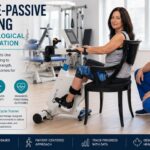
Did you know? MedUpBike’s Active-Passive Cycle Trainer is licensed by Health Canada and GST/HST exempt, making it a practical option for Canadian healthcare facilities, long-term care homes, and home-based exercise programs. Have questions? Let’s talk.
Why Health Canada Licensing Matters
When Canadian clinics or care facilities purchase rehabilitation equipment, they need to know that the device is appropriate for clinical or therapeutic use. Health Canada reviews medical devices to assess safety, effectiveness, and quality before they are authorized for sale in Canada.
This matters because rehab equipment may be used by individuals with:
- Neurological conditions
- Limited mobility
- Muscle weakness
- Spasticity
- Post-stroke impairments
- Balance or coordination challenges
- Age-related functional decline
For these users, equipment must be dependable, stable, and suited to therapeutic environments. A device that looks similar to exercise equipment may not necessarily be designed, regulated, or supported for rehabilitation use.
Medical-Grade Equipment vs. General Fitness Equipment
One common mistake is comparing medical-grade rehabilitation equipment directly with consumer fitness equipment. While both may involve movement, they are designed for very different purposes.
General fitness equipment is typically made for users who can exercise independently and safely. Rehab equipment, by contrast, is often designed for people who may require assistance, monitoring, or adaptive settings.
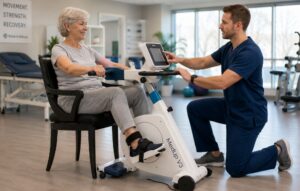
A medical-grade active-passive cycle trainer may include features such as:
- Motor-assisted movement
- Adjustable speed and resistance
- Passive and active training modes
- Spasm detection or safety stop features
- Upper and lower limb training options
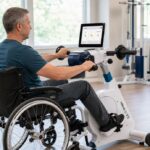
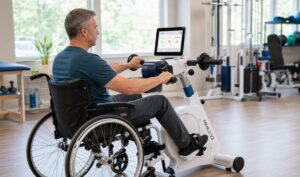
- Wheelchair accessibility
- Progress tracking
These features are especially important in clinical and long-term care settings where users have varying levels of mobility and tolerance.
What Canadian Facilities Should Consider Before Buying
Before investing in rehabilitation equipment, Canadian healthcare providers should assess how the device will be used in practice. A good purchase should support patient outcomes, staff workflow, and facility goals.
Key questions include:
- Who will use the equipment?
- Will it support both active and passive movement?
- Can it be used by wheelchair users?
- Is it appropriate for neurological rehabilitation?
- Can staff adjust settings easily?
- Does it support repeatable therapy sessions?
- Is the equipment suitable for long-term use in care environments?
These questions help ensure the equipment is not only clinically relevant, but practical for daily implementation.
The Role of Active-Passive Cycling in Rehab Settings
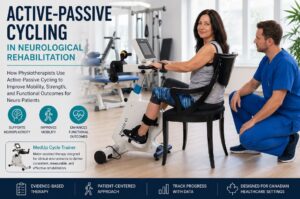
Active-passive cycling is widely used in rehabilitation because it allows users to participate in movement even when they cannot generate consistent effort on their own. In passive mode, the motor assists or drives the movement. In active mode, the user contributes effort, helping build strength, endurance, and coordination.
This flexibility makes active-passive cycling useful for a wide range of users, including individuals recovering from stroke, living with Parkinson’s disease or multiple sclerosis, managing reduced mobility, or participating in long-term maintenance programs.
According to the Canadian Physiotherapy Association, physiotherapy supports mobility, function, independence, and quality of life across a wide range of patient needs. This reinforces the importance of choosing equipment that supports safe, repeatable movement and functional goals.
Why GST/HST Exemption Can Matter
For Canadian buyers, GST/HST exemption can be an important practical consideration. In healthcare environments where budgets are closely managed, tax-exempt medical equipment may reduce total purchase cost and support easier procurement decisions.
This can be especially relevant for:
- Long-term care homes
- Rehabilitation clinics
- Seniors’ care facilities
- Community health providers
- Home-based care programs
While price should not be the only factor in choosing rehab equipment, total cost of ownership matters. Facilities should consider not only the purchase price, but also durability, utilization, serviceability, training needs, and how often the equipment will be used.
Supporting Staff Efficiency and Consistency
In many Canadian healthcare settings, staffing pressures and patient volume are real concerns. Rehabilitation equipment that is easy to set up and use can help staff deliver more consistent therapy sessions without adding unnecessary complexity.
Well-designed rehab equipment can support:
- Repeatable therapy routines
- Independent or supervised use
- Consistent session tracking
- Safe patient positioning
- Efficient transitions between users
This is especially helpful in long-term care homes and busy clinics, where equipment must fit into daily schedules and be simple enough for staff to use confidently.
Applications Across Canadian Care Settings
Health Canada licensed rehab equipment can support a variety of care environments.
Physiotherapy Clinics
Clinics may use active-passive cycle trainers to support neurological rehabilitation, post-injury recovery, mobility restoration, and low-impact conditioning.
Long-Term Care Homes
Long-term care homes may use motor-assisted cycling to help residents maintain movement, circulation, flexibility, and engagement.
Hospitals and Rehab Centres
In more structured rehabilitation environments, active-passive cycling can support early mobilization, repetitive movement, and progression from assisted to active participation. Early mobilization in patients in hospital settings is a key contributor to recovery.
Home-Based Exercise Programs
For individuals with mobility limitations, medically appropriate equipment can help make movement more accessible at home when guided by healthcare professionals or caregivers.
Safety, Suitability, and Long-Term Value
The best rehab equipment decisions are made by looking beyond the initial purchase. Canadian facilities should consider whether the equipment will remain useful across changing patient needs, different levels of ability, and multiple care programs.
Important long-term value factors include:
- Durability
- Clinical flexibility
- Ease of cleaning and maintenance
- Staff usability
- Patient comfort
- Safety features
- Availability of support
A lower-cost product that is difficult to use, poorly suited to rehabilitation, or underutilized may be less valuable over time than equipment designed specifically for therapeutic settings.
Choosing Equipment With Confidence
For Canadian clinics, care homes, and rehabilitation programs, purchasing rehab equipment is both a clinical and operational decision. Health Canada licensing provides an important layer of confidence, helping decision-makers understand that the device has been reviewed within Canada’s medical device framework.
By prioritizing safety, suitability, usability, and long-term value, healthcare providers can choose equipment that better supports patients, staff, and program outcomes.
For facilities looking to add active-passive cycling to their rehabilitation or mobility programs, a Health Canada licensed solution can offer both practical and clinical advantages.